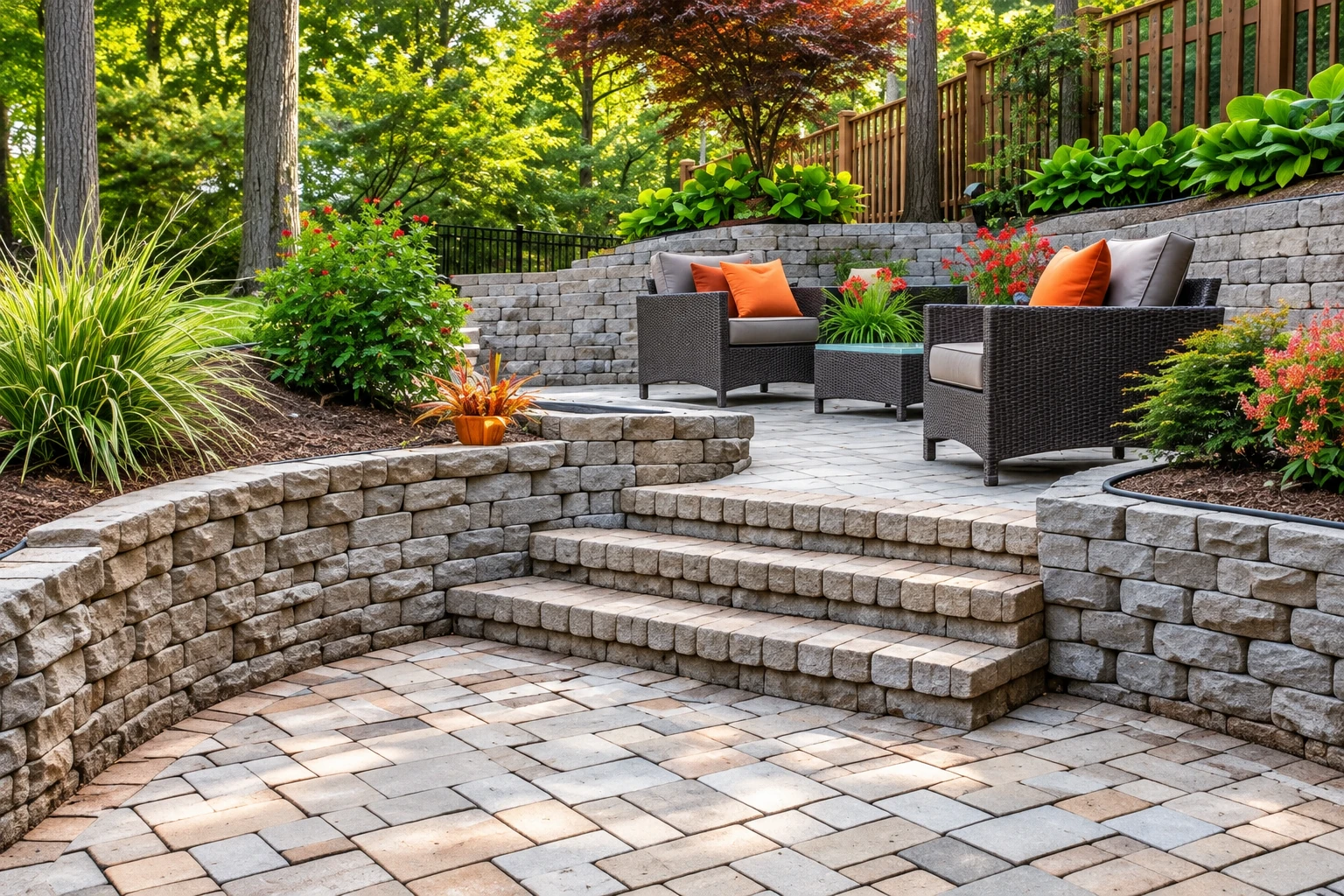
Retaining wall construction in Cupertino CA - a wall that drains and holds your slope
Slope crowding the yard or an old wall starting to lean? We build retaining walls with the drainage planned first, so they hold.
- Licensed and fully insured.
- Free estimates at your property.
- Replies within 1 business day.
What goes into building a retaining wall in Cupertino?
Retaining wall construction in Cupertino means building a wall that holds back the soil on a slope, so you get level ground and a bank that stays where it is. A wall like that is only as good as the drainage and the soil behind it, so that's where we start.
Most people who call D&R Cupertino Concrete and Masonry about a wall have a slope that's eating the yard, a bank that washes out after rain or an old wall that's started to lean, and they want it done once. We're based in Cupertino and build across the cities around it. The price mostly moves with the wall's height and length, the material, whether an old wall has to come out first, any curves or terraces, and how easy it is to get equipment into your yard. The schedule turns on utility marking, any soils review and whether the city has to sign off, and the written estimate I give you after seeing the site spells out what we'll do and why.
Is retaining wall construction right for your yard?
Yard sloping toward the house
Holding the soil back gives you level ground and helps keep runoff away from your foundation.
Old wall leaning or bulging
A lean usually means water is pushing from behind, so a rebuild with drainage fixes the cause.
Steep lot, no flat space
Stepping the slope with walls opens up room for a patio, a lawn or planting beds.
Driveway cut into a bank
A wall keeps a cut bank from slumping onto the pavement after a wet winter.
How we handle retaining wall construction
Before we stake a line or pick a block, I work out where the water behind the wall is going to go, because a wall that can't shed water is the one that ends up leaning. Then we mark the layout, dig out, pack a gravel base and set the first course dead level, since every course above it follows that one. We build up with the drainage going in behind the face as we go, backfill, set the cap and clean up before we leave.
If you've got an older stone or brick wall that's still sound but worn, masonry restoration may make more sense than tearing it out. Once a wall gives you flat ground, a lot of people want to use it, and a level terrace is a good spot for the kind of work we do in fireplace installation. When you need a freestanding wall for privacy or a property line instead of one holding back soil, we build concrete block walls too.
A new wall on an open slope
This suits a yard where the slope is taking up space and nothing's been built yet. We pick the wall type for the ground and the room behind it, and you end up with flat ground on the high side.
Replacing a leaning or failed wall
This suits a house where an old wall is tipping, bulging or rotting out. Tearing out the old wall adds to the job, and I find out why it went before we build, because the same water will hit the new one.
Terraced walls on a steep bank
This suits a tall slope where one wall would have to get high, so we step it with two or more shorter walls and planting room between them. There's more wall and more digging, so it costs more than a single wall.
What happens when you call about a retaining wall in Cupertino?
Call and set up a visit
Call (669) 215-2127 or use the form, and I'll set up a time to come out and see the job myself.
Walk the slope together
I ask what you've noticed and walk the slope with you, looking at where water runs and how the ground sits. You get a written estimate that says what we'll build and why, including how it drains, so you can compare bids on what's behind the wall and not just the price.
Clear permits and mark utilities
If the city needs to sign off, we take care of that before we start. Before anyone digs, buried utilities get marked through 8-1-1, which takes a few days, so we leave room for it in the schedule.
Build it and walk it again
I'm on the job with our crew of masons from the first dig to the cap. When we're done, you and I walk the wall together again.
Block or poured concrete for a retaining wall?
Let the room you have decide it.
A segmental block wall is dry stacked from factory-made concrete units with no mortar, and it holds the soil back mostly by its own weight. It's a good, flexible choice where there's room to work behind the wall, and it gives you more choices in how the face looks.
Of the wall types one comparison guide looks at, poured concrete takes up the least ground for a given height. So when your wall has to sit close to a property line or a driveway, poured concrete is the one I'd lean toward. In an open yard, block usually does the job well.
Examples of masonry work
Look through these examples of masonry work, from retaining walls and block walls to brick, stone and paving, to get a feel for what's possible.
Get a written estimate for your retaining wall
Send photos of the slope, the rough length and height of the wall, and how wide your side gate is. We reply within one business day to set up a free, obligation-free visit, and I come out myself.
Why Cupertino homeowners call D&R Cupertino Concrete and Masonry for retaining walls
I walk every job myself
I come out to look at each job and write the estimate, and I'm on site with our crew of masons when we build. The person who sized up your slope is the one standing next to the wall.
Licensed and fully insured
California's Contractors State License Board requires a license for anyone who does or offers construction contracting, and we hold one. We carry insurance on every job, which matters when we're digging next to your house.
In business since 2013
I started this business in Cupertino in 2013 after years of framing houses, so I look at the whole site and not just the face of the wall. To get started, call (669) 215-2127 or send us the form with a few photos of your slope.
Retaining wall questions we hear
How much does a retaining wall cost near Cupertino?
A poured concrete retaining wall about 3 feet high usually runs about $50 to $60 per square foot in the San Jose area, with the concrete, materials and supplies included. That usual figure leaves out tearing out an old wall, terraces, stamped or stained concrete, extra height, curves and added landscaping, so each of those raises it. Your written estimate gives you the number for your own slope.
What causes retaining walls to fail?
Too much water in the soil behind the wall is one of the main causes. A block wall with too little drainage gravel or no pipe at its base can bulge or tip within a few wet seasons, and getting the drainage right costs little next to the wall itself, so ask how water will drain before you compare bids.
What is the best way to handle drainage behind a retaining wall?
The usual answer is clean crushed stone right behind the face, a drain pipe at the base that comes out downhill, and backfill that drains freely instead of the clay dug out of the site. Those are fair questions to put to anyone bidding your wall, and they're how we build ours.
Does a short retaining wall need an engineer?
It can. One block maker's guide calls the 4 foot height only a rule of thumb that assumes the best case, and a wall under 4 feet can still need a qualified soils engineer depending on the soil. I'll tell you plainly when your slope needs one, and from there it's the engineer's call, not mine.
How long does a timber retaining wall last?
Even lumber rated for ground contact typically lasts 15 to 25 years, and it goes faster when the base sits on bare soil instead of gravel or when drainage is an afterthought. If you want a wall you won't be rebuilding, I'd point you to block or concrete.
Can you build a boulder retaining wall if my backyard only has a side gate?
Usually not. Boulders big enough to hold back soil take an excavator or skid steer to set, so a yard you can only reach through a narrow side gate rules them out. Measure your gate when you send photos and I'll tell you what can get back there.
Got a slope that needs holding back?
Ask for an estimate and I'll come walk the slope with you, then put what we'll do and why in writing.
Other work around your walls
What Cupertino's hillside rules and soil mean for retaining wall construction
If your house sits in Cupertino's RHS zone, the city's residential hillside zone, a project that meets the hillside rules may be permitted through the regular building permit process, but asking for an exception to any of those rules may mean a public hearing with the Planning Commission. The city also requires studies before it approves work in that zone, including arborist and geotechnical reports, and its own consultants review them, which is one more reason we settle the soil question before the design. Off the hillside, whether your wall needs a permit is a question for the city, so ask and we'll check with them. When a permit is needed, we handle the application and plan our start around the city's review.
The state flags properties where weak soil or rock is likely, and that kind of ground can fail in an earthquake and damage what's built on it if grading and construction skip the right precautions. So on a slope I look at the ground before the wall, and we bring in a soils engineer when it calls for one. We weigh the same hillside questions on jobs in Saratoga and Los Altos.